


Explosion Prevention and Protection in the Pharmaceutical Industry: Fluid Bed Dryer
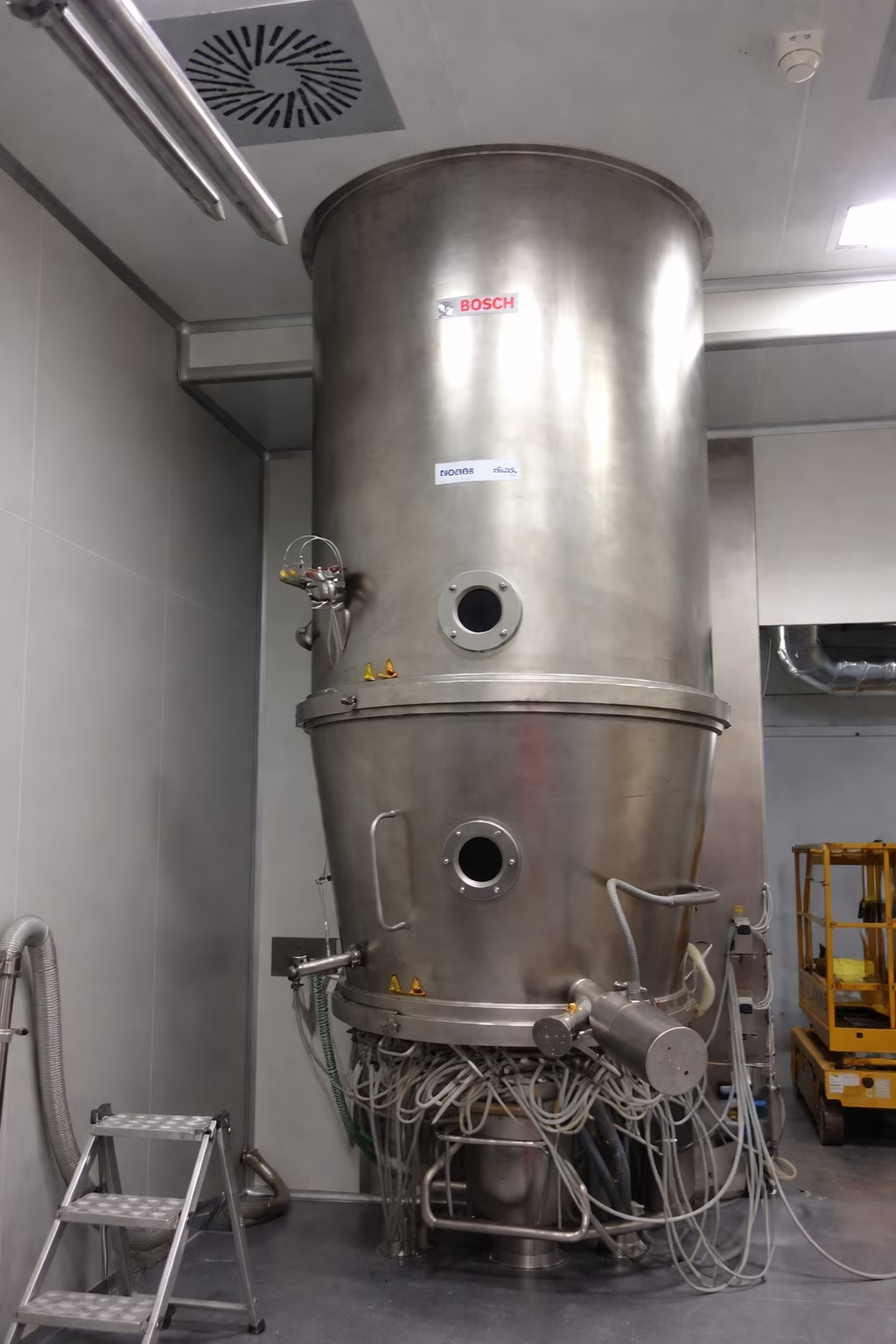
The pharmaceutical industry uses, handles or produces substances considered flammable in the form of dust or liquid in some of its processes. One of the main processes in this industry is the granulation, coating and drying of powdery products, carried out on a piece of equipment called a fluidized bed dryer (also known as a fluid bed granulator).
How a Fluid Bed Dryer Works in the Pharmaceutical Industry
The fluid bed dryer consists of a main chamber where the powdery product is loaded, usually by means of a pneumatic conveying system.
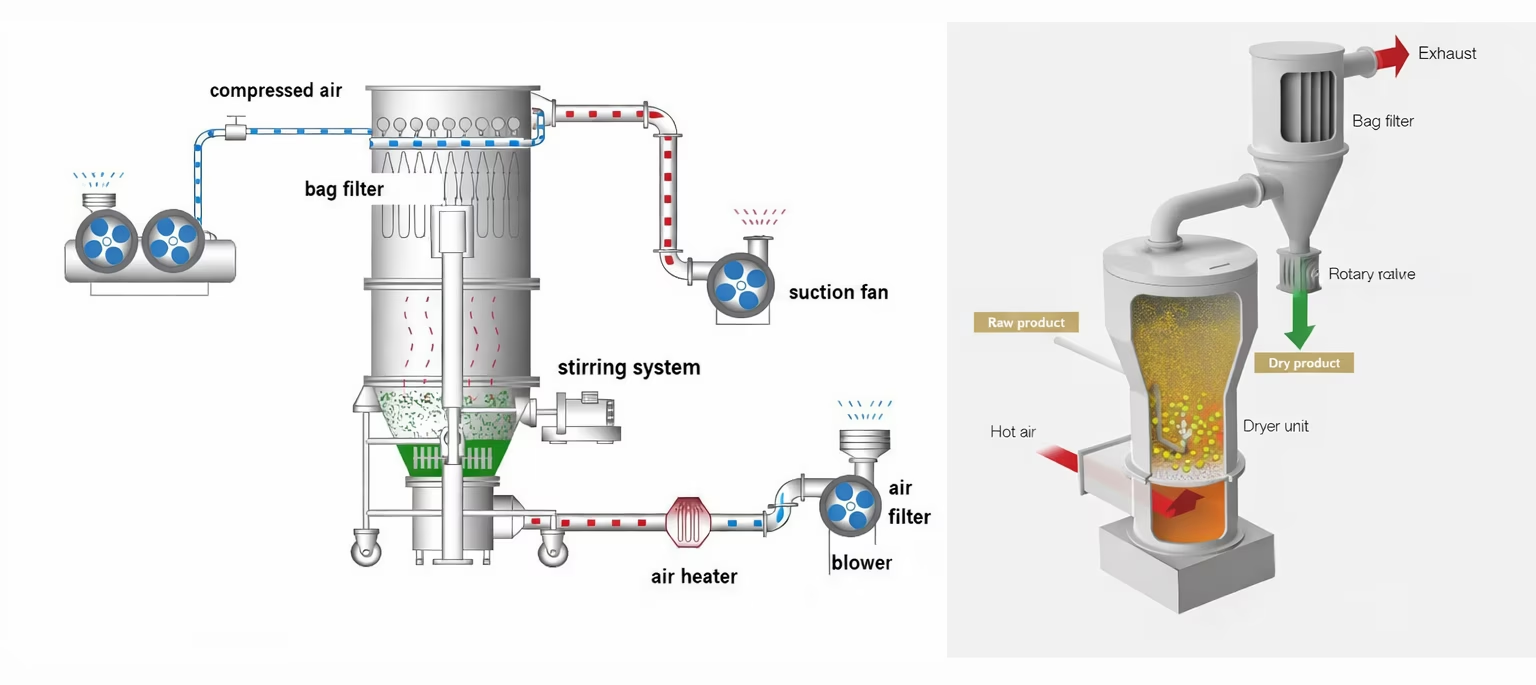
The product is suspended by the inlet of an air stream, which is redirected through a perforated plate.
The granulation process is carried out by projecting, through a nozzle, a binder product onto the suspended material. This allows the initial particle size to be increased, giving rise to the so-called “granules”.
The air used in the process is hot and at high pressure, which favors both the formation of the granules and their subsequent drying.
The coating process is carried out in a similar way, using different spray nozzles in this case.
The main chamber also has cartridges located in its upper part, which retain the product and its subsequent discharge to the lower area by means of pressurized air.
In addition, the equipment usually incorporates the following systems:
- Air Injection and Heating System
- Dust extraction system, usually by cartridge filter
- Product loading and unloading system
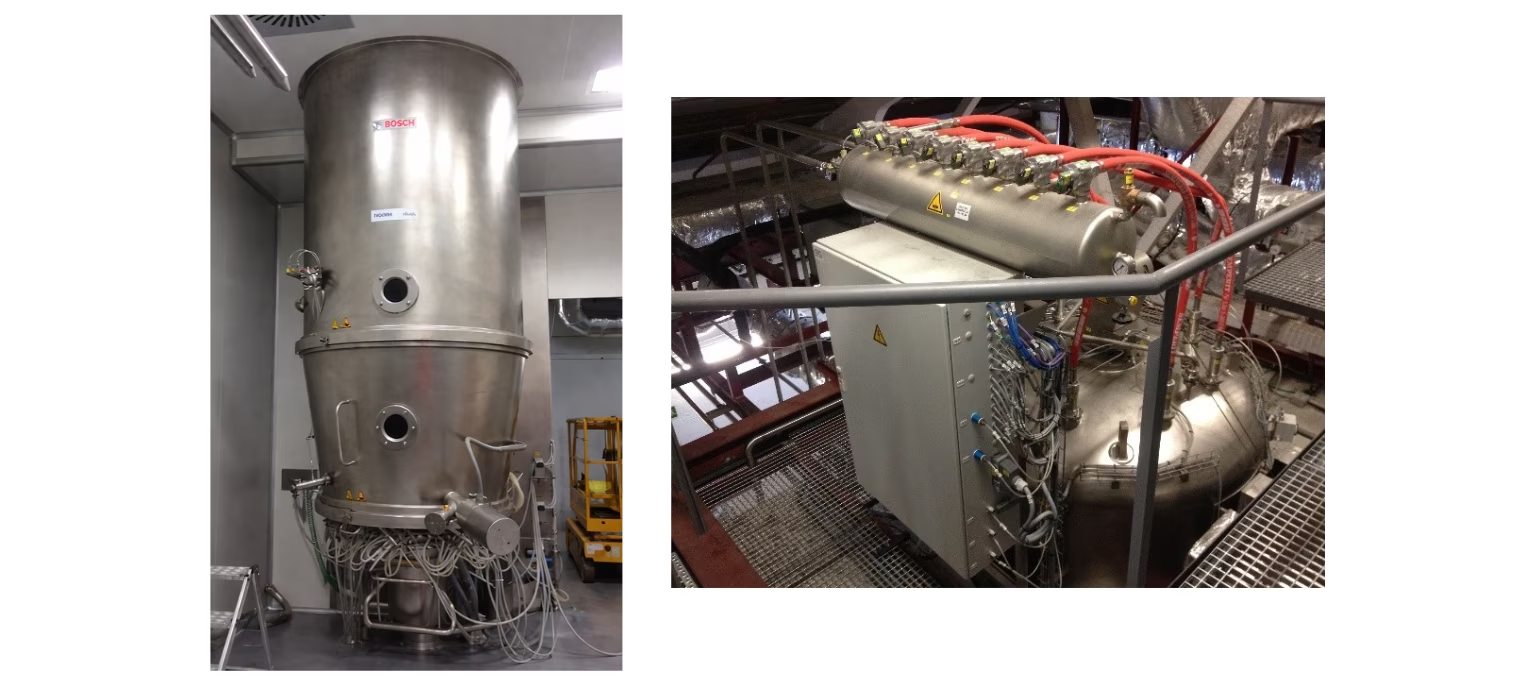
Explosion risk in fluid bed dryers
The use of powdery products with flammable characteristics in this equipment is one of the main explosion risks in the pharmaceutical industry.
Therefore, a correct explosion risk assessment should be considered as one of the main objectives to establish an effective strategy against this risk.
Explosion Risk Assessment in Fluid Bed Dryers
To carry out a correct assessment of the risk of explosion, we can use as support some of the most widely used international standards of recognized prestige, among which we can highlight the following:
- VDI-2263, part 5: Dust fires and dust explosions: Hazards – assessment – protective measures; Explosion protection in fluid bed dryers (2014)
- NFPA 654: Standard for the Prevention of Fires and Dust Explosions from the manufacturing, processing and handling of combustible particulate solids
The assessment should start by analysing the frequency of formation of explosive atmospheres, which results in the classification of ATEX zones.
ATEX Zone Classification in Fluid Bed Dryers
An example of classification in a standard fluid bed dryer is as follows:
Zone 20 (continuous or very frequent explosive atmosphere)
- Inside the drying chamber (including retaining cartridges)
- Inside the final product discharge hopper
- Inside the Cartridge Filter Dirty Chamber
Zone 21 (occasional explosive atmosphere)
- Inside the pneumatic loading and unloading transport ducts
Zone 22 (explosive atmosphere unlikely)
- Outdoor area around the hopper (approx. 1 meter)
- Clean Filter Chamber
- Clean Air Outlet Duct
- System Fan
Potential Ignition Sources
During the evaluation, the possible effective ignition sources should be considered:
- Static electricity produced by loss of grounding
- Hot particles and self-combustion phenomena due to excess temperature in the drying air
- Electrical sparks or hot surfaces generated by equipment not assessed according to Directive 2014/34/EU (equipment not ATEX certified)
Recommended prevention and/or protection measures
Considering the possible presence of explosive atmospheres on a near-continuous basis and the variety of ignition sources that can be effective, the likelihood of an explosion occurring in a fluid bed dryer is high and its consequences can be catastrophic for facilities and people.
Therefore, it is necessary to implement both prevention measures and explosion protection measures in this equipment.
1. Explosion Prevention Measures in Fluid Bed Dryers
As Directive 1999/92/EC indicates, the priority of an efficient strategy to avoid the risk of explosion is to prevent it from occurring, either by preventing the appearance of a possible explosive atmosphere or by preventing the appearance of an ignition source if this cannot be fulfilled. For this type of equipment there are a series of prevention measures that can be implemented:
Prevention of explosive atmospheres
- Dust collection system
- Regular cleaning of dust layers inside
- In case of use of organic solvents:
- Installation of flammable gas detectors
- Location in the filter clean chamber
- Stuck with the stoppage of the process
Preventing Ignition Sources
- Equipment design that makes it difficult for dust to accumulate in internal areas
- Drying air temperature control and monitoring
- Para polvo sensible a la inflamación (EMI < 3 mJ):
- Installation of CO detector in the drying chamber
- Correct grounding and equipotentiality of all systems
- Including anti-static pneumatic conveying hoses
- Use of electrical equipment assessed according to Directive 2014/34/EU and suitable for the area
2. Explosion Protection Measures in Fluid Bed Dryers
In the event that the risk assessment determines that it is not possible to eliminate the risk of explosion by preventive measures alone, explosion protection measures shall be implemented.
These measures are aimed at protecting both facilities and workers from the consequences of an explosion.
For this type of equipment, the following can be considered:
Explosion-resistant construction
- Dryer design with explosion pressure resistance (up to 10 bar)
Explosion Venting Systems
- Explosion vents certified according to the ATEX Directive 2014/34/EU (mandatory in the European Union)
- Dimensioning of the vent area according to recognized standards:
- EN 14491:2012 (Dust explosion venting protective systems)
- NFPA 68 (Standard on explosion protection by deflagration venting)
- In the case of equipment installed indoors:
- Use of flameless venting systems
Vents in cartridge filters are one of the most common solutions, due to:
- Ease of installation
- High adaptability to equipment
- Low maintenance requirements
However, it is not always possible to implement them, so in these cases it is necessary to resort to other protection systems.
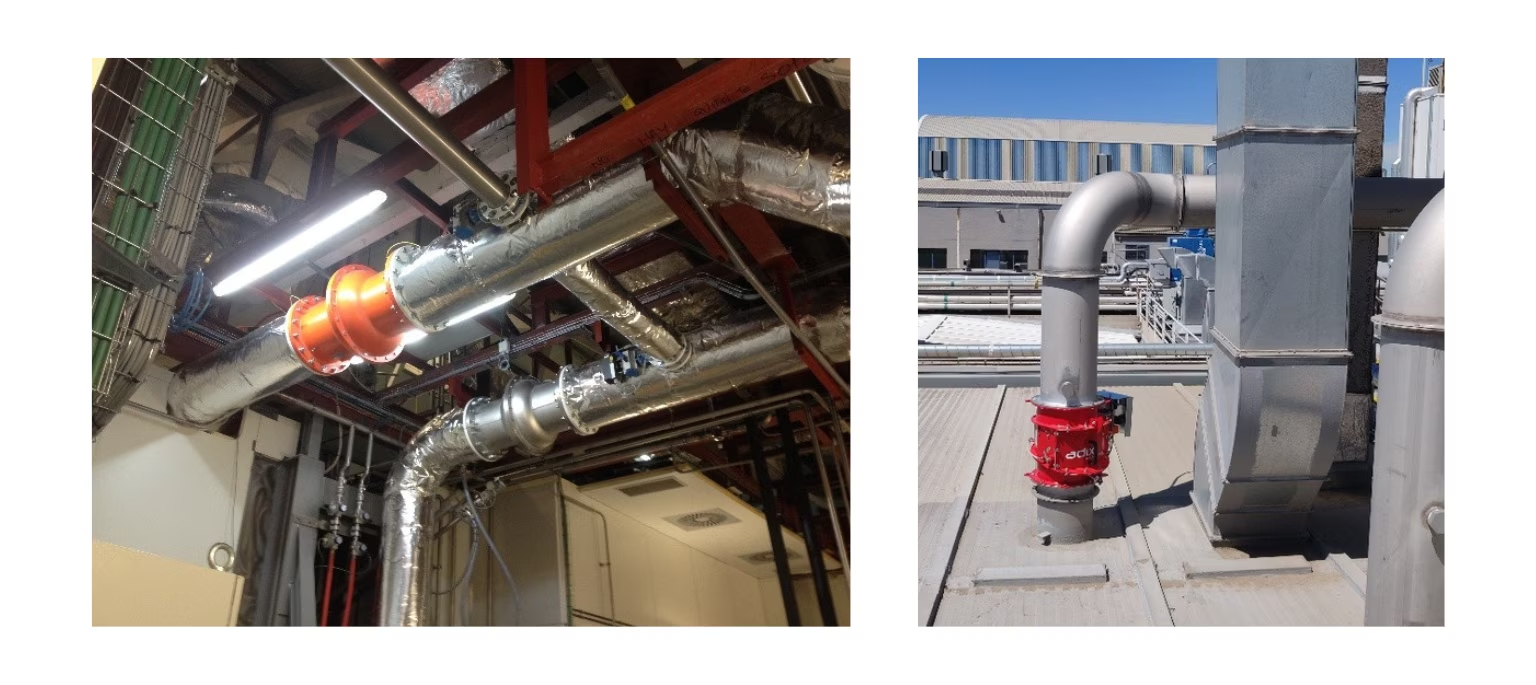
Explosion Isolation Systems
- Isolation valves certified as protection systems according to the ATEX Directive 2014/34/EU
- Installed in the dryer’s air intake and outlet ducts
Its objective is to prevent the spread of a possible explosion to other equipment or parts of the installation.
Design and Implementation Considerations
The implementation of protection systems must be carried out:
- Following the recommendations of recognized standards or guides (such as EN 14491 or NFPA 68)
- Respecting the intended use according to the equipment certification
3. Maintenance of prevention and protection systems
The simple installation of explosion prevention and/or protection systems does not ensure complete and effective protection of the installations if it does not entail the subsequent maintenance of the systems.
This maintenance can be carried out by an in-house maintenance service when it comes to simple systems, such as vents or flameless venting systems.
However, in the case of more complex systems, such as explosion isolation valves, maintenance must be carried out by a certified company and trained specifically for this purpose.
The frequency of maintenance operations must be as indicated by the manufacturer in its service manual, and must be complied with without exceptions.
In addition to proper maintenance, it is recommended to have critical spare parts to reduce the impact that the activation of any of these systems may have on the production process, as well as to guarantee safe conditions at the time of resuming operation.
Conclusion
Fluid bed dryers are key pieces of equipment in the pharmaceutical industry, but they present a significant risk of explosion due to the use of combustible dust under favorable conditions.
A correct risk assessment, together with the implementation of prevention and protection measures, is essential to guarantee the safety of facilities and people.
