


ATEX zone classification: what it is, how it is determined and how it is represented
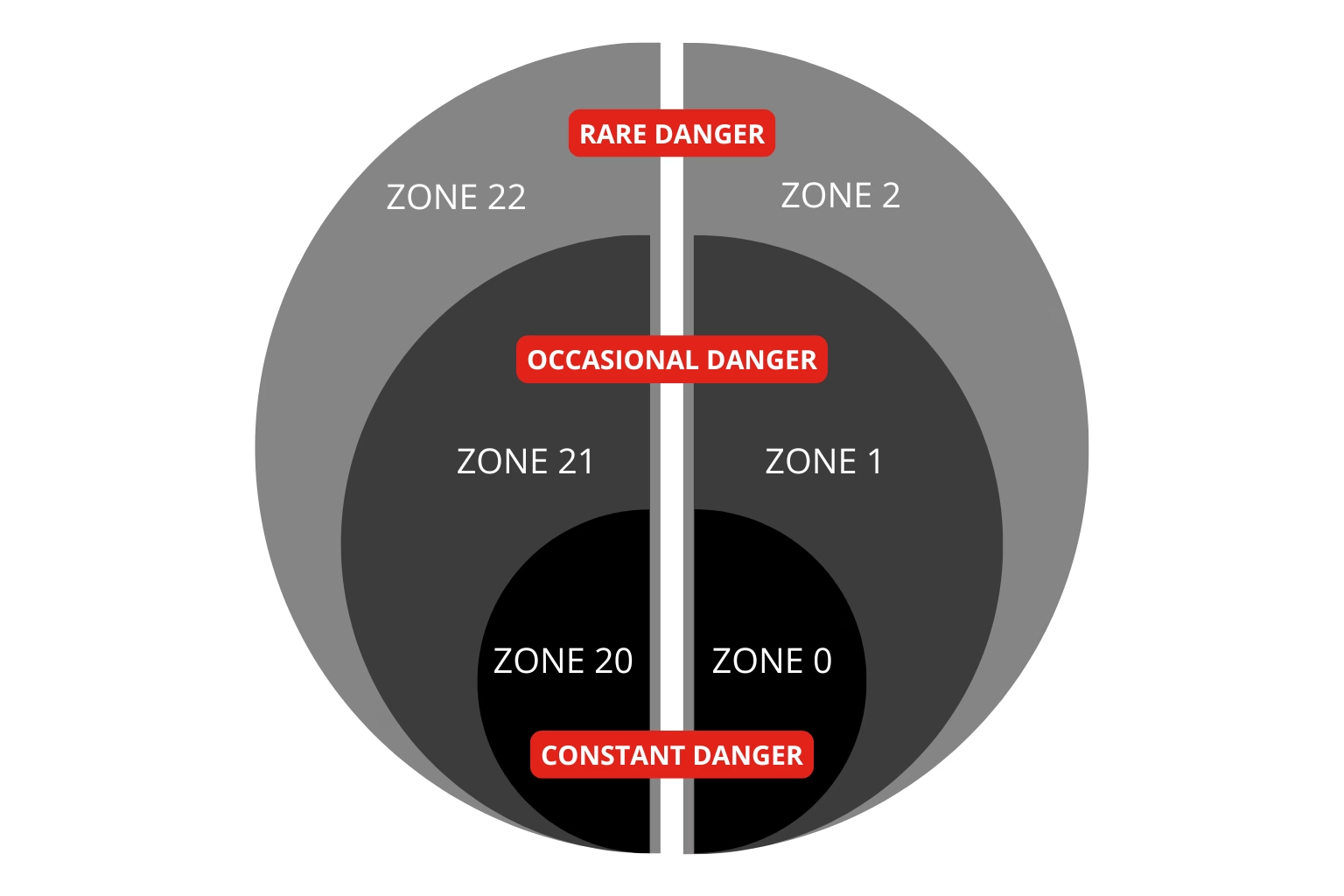
Flammable substances, such as gases, liquids or combustible dusts, are handled in many industrial installations, which can form explosive atmospheres when mixed with air. These situations pose a significant risk to the safety of people, equipment, and the facilities themselves.
To control this risk, it is essential to identify areas where there is a potential for these hazardous atmospheres to occur . The classification of ATEX zones allows the installation to be divided into areas according to the probability and duration of the presence of an explosive atmosphere, which facilitates the adoption of specific preventive measures in each case.
This analysis is usually captured in an ATEX zone map, a graphical representation of the plant that clearly indicates the areas at risk of explosion. This map is a key tool for safety management, as it establishes the criteria for the selection of suitable equipment, the design of facilities and the implementation of safe work procedures.
What is an ATEX zone?
An ATEX zone is an area within an industrial facility where there is a risk of an explosive atmosphere forming due to the presence of flammable substances. These atmospheres can be generated mainly by the suspension or accumulation of:
- Flammable gases.
- Flammable liquid vapors.
- Combustible dust.
When these substances mix with oxygen in the air in specific proportions, any source of ignition (such as an electric spark, hot surface, or open flame) can trigger an explosion.
Regulatory Framework and Classification Standards
In accordance with the European Directive 1999/92/EC (on the protection of workers exposed to risks arising from explosive atmospheres), employers and users have a legal obligation to assess such risks and carry out the corresponding classification of areas in their facilities.
To carry out this technical delimitation rigorously, different international standards and sectoral guides of recognized prestige are used:
- International / European Standard: * UNE-EN / IEC 60079-10-1: For the classification of areas with the presence of flammable gases and vapours.
- UNE-EN / IEC 60079-10-2: For the classification of areas with the presence of combustible dust.
- American Standard: * NFPA 497: Recommended Practice for the Classification of Chemical Process Locations for Flammable Gases and Vapors.
- Industry Guidelines and Practices: * EI 15 (former IP15): Energy Institute Code of Good Practice widely used in the oil and gas sector.
- API RP 505: American Petroleum Institute Recommended Practice for Classification of Locations in Petroleum Facilities.
Importance of Classification
This process of identifying and delimiting according to the frequency and duration of the explosive atmosphere is a fundamental part of the risk analysis in industrial facilities. Its correct application allows:
- Accurately assess the level of explosion risk in each area.
- Select suitable equipment and protection systems (with ATEX certification or specific marking) to work safely.
- Implement specific organisational and prevention measures (work permits, ventilation, control of ignition sources).
Why it is key to know and classify ATEX zones correctly
The correct classification of ATEX zones is essential to effectively manage the risk of explosion in industrial facilities. This process makes it possible to accurately identify areas where hazardous atmospheres may be generated and to act accordingly. In practice, zone classification makes it possible to:
- identify areas at risk of explosion within the facility
- Select certified and suitable equipment for each type of area
- design and implement effective safety measures, such as ventilation, ignition source control, or safe work procedures
- comply with current regulations on industrial safety
In addition, this classification forms the fundamental basis for the preparation of the Explosion Protection Document (BCD). The obligation to prepare and keep this document updated is required at European level by the ATEX Directive 1999/92/EC, which is transposed into Spanish legislation by Royal Decree 681/2003, on the protection of the health and safety of workers exposed to the risks arising from explosive atmospheres in the workplace.
What factors determine an ATEX zone
The classification of ATEX zones is not an arbitrary process, but is based on the detailed analysis of different technical factors specific to each installation. These elements make it possible to assess the probability of formation of an explosive atmosphere and, therefore, to define the level of risk in each area.
Among the most relevant factors are:
Type of flammable substance
The risk behaviour varies according to the nature of the substance present:
- Flammable gases or vapors
- combustible dust
Each one has different characteristics in terms of dispersion, ignition and dangerousness.
Release frequency
It analyzes how often the flammable substance can be released during the production process, whether continuously, occasionally or accidentally. This aspect is key to determining the type of the area.
Area Ventilation
The quality of ventilation has a direct influence on the accumulation of flammable substances. However, its impact varies depending on the type of substance:
- In flammable gases and vapours: Adequate ventilation is essential, as it generates dilution, disperses substances and significantly reduces both the probability of formation of explosive atmospheres and the extension of the classified area.
- Combustible powder: Inadequate or poorly designed ventilation can be counterproductive, as air movement can cause the dispersion of accumulated dust, generating flammable clouds and increasing the risk of explosion.
Process Setup
The design and operation of the facility are also decisive, including:
- The equipment used
- Loading and unloading points
- material storage areas
All these factors are studied together during the ATEX zone classification process, with the aim of establishing safety measures proportional to the level of risk identified.
ATEX Zone Classification: Gases and Vapours
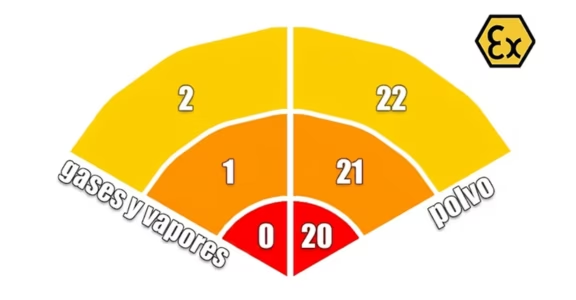
In installations where flammable gases or vapours are present, the classification of ATEX zones is divided into three categories based on the probability and duration of the presence of an explosive atmosphere.
Zone 0
It is the area where the explosive atmosphere is present continuously or for long periods of time. This is the highest level of risk, so it requires the maximum security measures.
Common examples:
- Inside Tanks
Zone 1
Corresponds to areas where explosive atmosphere may occasionally appear during normal operation of the facility. The risk is significant, though not constant.
Common examples:
- Areas near valves or connections
- Loading or unloading points
Zone 2
It includes areas where the formation of an explosive atmosphere is not likely under normal operating conditions, but could occur on a one-off basis and for short periods of time. In this case, the level of risk is lower, although preventive measures are still necessary.
Example of zone 1 and 2:
Steam from an outdoor breathing valve, from a process vessel
Location Features:
- Indoor location: Unobstructed location
- Ambient pressure, Pa: 101 325 Pa
- Room temperature, T: 20ºC (293K)
- Fan speed, Uw: 1.0 m/s
- Ventilation availability: Good (air speed in calm weather conditions)
Exhaust Effects:
- Dilution Degree: Medium
- Zone Type(s): Zone 1 + Zone 2
- Material Group Temperature Class: IIA T1
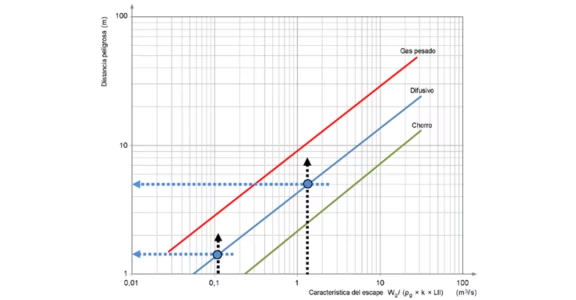
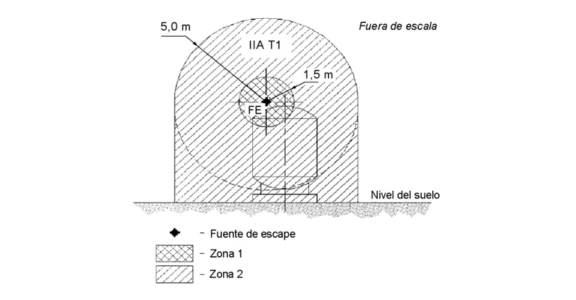
Classification of the hazardous site:
Taking into account the corresponding parameters, the following hazardous sites are specific to the breathing valve studied (see Figure 1).
ATEX Zone Classification for Combustible Dust
In installations where combustible dusts are handled, the classification of ATEX zones is also divided into three categories, adapted to the specific behaviour of this type of substance.
Zone 20
It is the area where there is a continuous or frequent presence of a cloud of suspended combustible dust. This is the highest risk level in this type of environment.
Common examples:
- Inside Silos
- Inside Bag Filters
Zone 21
Corresponds to areas where a cloud of combustible dust may form during normal operation of the installation. The risk is significant, although not permanent, and requires appropriate control measures.
Examples of sites that can give rise to zone 21:
- locations adjacent to dust containers and in the vicinity of access doors subject to frequent removals or openings due to the necessity of the operation when an explosive dust atmosphere is present inside.
- locations outside dust containers in the vicinity of filling and emptying points, belt feeding, sampling points, truck unloading stations, conveyor belt dumping points, etc., when measures are not used to prevent the formation of explosive dust atmospheres.
- locations outside dust containers where dust accumulates and where, due to process operations, the dust layer is susceptible to dispersion and form explosive dust atmospheres.
Zone 22
It includes areas where the formation of a combustible dust cloud is not likely under normal conditions, but may appear occasionally and for short periods of time. Although the risk is lower, preventive measures are still necessary.
Common errors when classifying ATEX zones
The classification of ATEX zones is a technical process that requires a rigorous analysis of the installation and its actual operating conditions. However, in practice it is common to make certain mistakes that can compromise security or generate unnecessary cost overruns. Among the most common failures are:
1. Classifying areas without correctly analyzing the process
Performing the classification generically or based on assumptions, without studying in detail how the installation actually works, can lead to unreliable results. To avoid this, it is essential to approach this process through a multidisciplinary work team made up of the user (owner of the installation) and the classifying technician. This team must integrate, at least, the following profiles:
- Process Engineer: It provides knowledge of the operating variables, substances and flows.
- Electrical Engineer / Maintenance: Define the characteristics of existing facilities and equipment.
- Security Manager: Ensures regulatory compliance and global risk prevention.
2. Not considering actual material leaks or releases
It is essential to consider possible leaks, losses or emissions during normal operation or in abnormal situations, as they are a common source of explosive atmospheres. In this regard, it should be noted that the rule refers strictly to “foreseeable situations” and not to catastrophic situations.
3. Underestimating combustible dust buildup
In dusty environments, it is not only the suspended cloud that matters, but also the accumulated deposits that can disperse and generate a secondary explosion.
4. Not checking the classification after changes in the installation
Modifications in equipment, processes or operating conditions can alter the level of risk, so the classification must be updated periodically (usually every 3 or 5 years) or immediately in the event of any substantial modification of the installation. It should be remembered that the ATEX Directive (2009/104/EC / Royal Decree 681/2003) legally obliges the employer to carry out these periodic reviews and updates to keep the Explosion Protection Document (DPCE) in force.
5. Using criteria that are too conservative or too lax
An overly restrictive classification can make the installation unnecessarily expensive, while an overly permissive one increases the risk of an accident. Therefore, it is essential to maintain a criterion based on the current state of the art, with the best general wisdom being to apply the current international standards (IEC 60079-10-1 for gases and vapours, and IEC 60079-10-2 for combustible dusts) to ensure an optimal balance between safety and cost.
Consequences of incorrect classification.
Improper classification of ATEX zones can have serious consequences both from a safety point of view and at a legal and economic level. By not correctly reflecting the real risk of the installation, wrong decisions can be made that compromise the safe operation of the processes.
Security risks
An incorrect evaluation significantly increases the probability of accidents:
- Increased chance of ignition
- Risk of industrial explosions with possible personal and property damage
Regulatory problems
Failure to comply with the legal requirements in ATEX matters may result in sanctions and liabilities:
- Failure to comply with applicable regulations
- Possible legal liabilities in the event of an incident
Economic impact
Decisions based on poor classification also affect the profitability of the installation:
- Use of unsuitable or uncertified equipment
- Production stoppages due to incidents or inspections
- need to make corrective modifications, generally more costly than proper planning
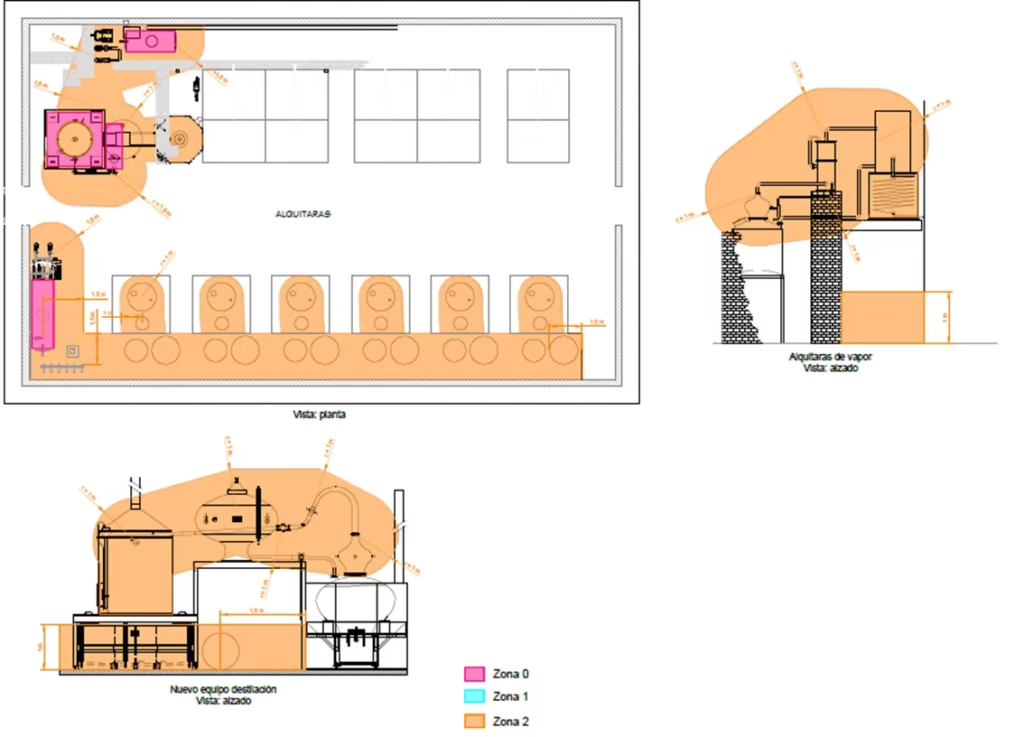
Example of ATEX zone classification map
An ATEX zone classification map is the graphical representation of the areas at risk of explosion within an industrial facility. Its aim is to clearly and visually show where explosive atmospheres can form and what level of risk exists in each area.
These plans usually include:
- process equipment (tanks, pipes, filter systems, etc.)
- the classified areas around such equipment
- the type of ATEX zone assigned (Zone 0, 1, 2 or 20, 21, 22)
Thanks to this type of representation, engineers, maintenance managers, and safety personnel can quickly identify critical areas and make informed decisions about equipment use, protective measures, and work procedures.
In addition, ATEX zone maps facilitate communication between the different departments involved and serve as a reference during inspections, audits or modifications to the installation.
In studies carried out by specialized companies such as Adix, these maps constitute an essential part of the technical documentation of the ATEX analysis, as they visually integrate all the information obtained during the risk assessment.
Example made by Adix:
Discontinuous distillation is carried out in the warehouse. It has two types of alquitaras (the steam ones in operation and the wood ones out of service), as well as a new distillation equipment installed next to the wood ones.
Classification of Zones:
- Zone 0: * Inside the product tanks (in the free space between the liquid and the top of the container) with more than 30% v/v ethanol.
- Zone 1: * A sphere with a radius of 1.5 metres around the vent outlet of the alquitaras.
- Zone 2: * The interior of the alquitaras and condensers (associated with the start-up and shutdown processes).
- A sphere with a radius of 1 meter around possible steam leakage points in alquitaras and condensers.
- The area of the possible puddle due to leaks in pumps, valves and joints (with a range of 1.5 meters horizontally and 1 meter vertically upwards).
Conclusion
The correct classification of ATEX zones is an essential element for the management of the risk of explosion in industrial facilities where flammable substances or combustible dusts are handled.
Understanding the factors that determine the formation of explosive atmospheres and analyzing them rigorously allows for the precise identification of risk areas within the facility. Based on this evaluation, the representation by means of classification maps facilitates a clear and structured view of these areas.
This approach not only allows the right safety measures to be applied in each area, but also contributes to the correct selection of equipment, regulatory compliance and accident prevention. Overall, an adequate ATEX classification is key to guaranteeing the safety of people, the integrity of the facilities and the continuity of industrial processes.
