



Explosion Protection and Prevention
for Bucket Elevators

Bucket elevators are used to convey bulk solids vertically, but their design and maintenance require special attention because of their high explosion hazard. The combination of an enclosed structure, suspended combustible dust and continuously moving parts creates the right conditions for explosive atmospheres and ignition sources to occur.
At Adix, we apply ignition source monitoring systems together with explosion venting, active suppression and isolation solutions that reduce the likelihood of ignition and prevent explosions from propagating to other connected equipment.
Why can
a bucket elevator explode?
As the product is conveyed, fine particles become suspended inside the elevator, mixing with air and creating a potentially explosive atmosphere. On top of this, ignition sources are common: friction between mechanical parts, overheating of shafts or bearings, electrostatic discharges, or sparks carried over from connected equipment.
Once started, the explosion can quickly propagate through ducts and spouts, affecting silos, dust collectors or other equipment in line.
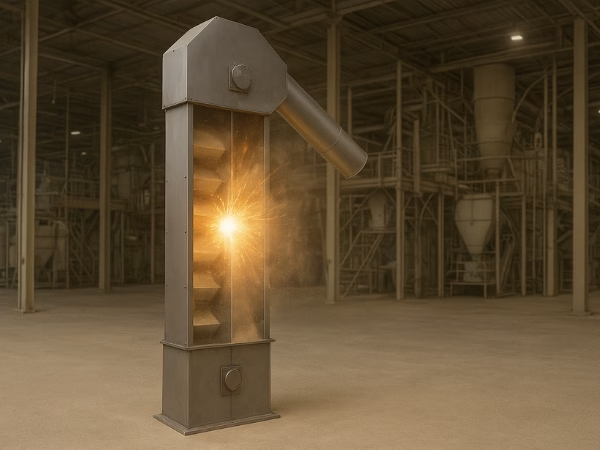
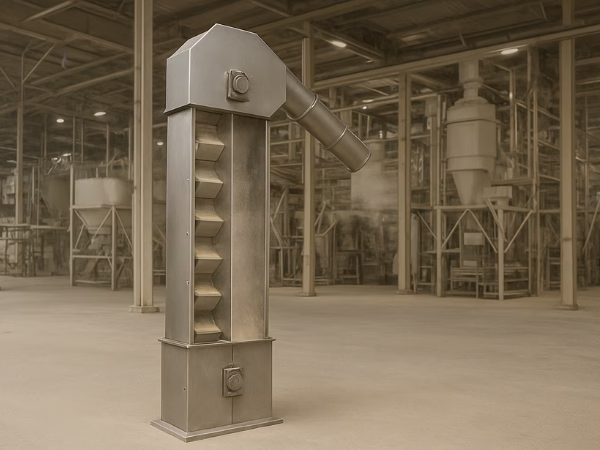
Main hazards
in bucket elevators:
ADIX Solutions for Bucket Elevators
We apply a combination of prevention, protection and isolation measures, tailored to the operating conditions of each plant and in accordance with the ATEX Directives (2014/34/EU and 1999/92/EC) and international standards such as NFPA 68 and NFPA 69.
Explosion venting
Domed or flat explosion vent panels to relieve overpressure safely.
Flameless venting
Ideal for indoor locations, it prevents flame and material ejection.
Active suppression
Pressure or infrared sensors trigger an extinguishing agent that puts out the deflagration within milliseconds.
Preventive monitoring
Ideal for indoor locations, it prevents flame and material ejection.
Isolation
Explosion isolation flap valves or chemical barriers that prevent propagation to other equipment.


Not sure how to protect your bucket elevator?
We analyze your facility and help you apply the most effective solutions to prevent explosions and protect your bucket elevators
