



Explosion Protection and Prevention
for Hammer Mills
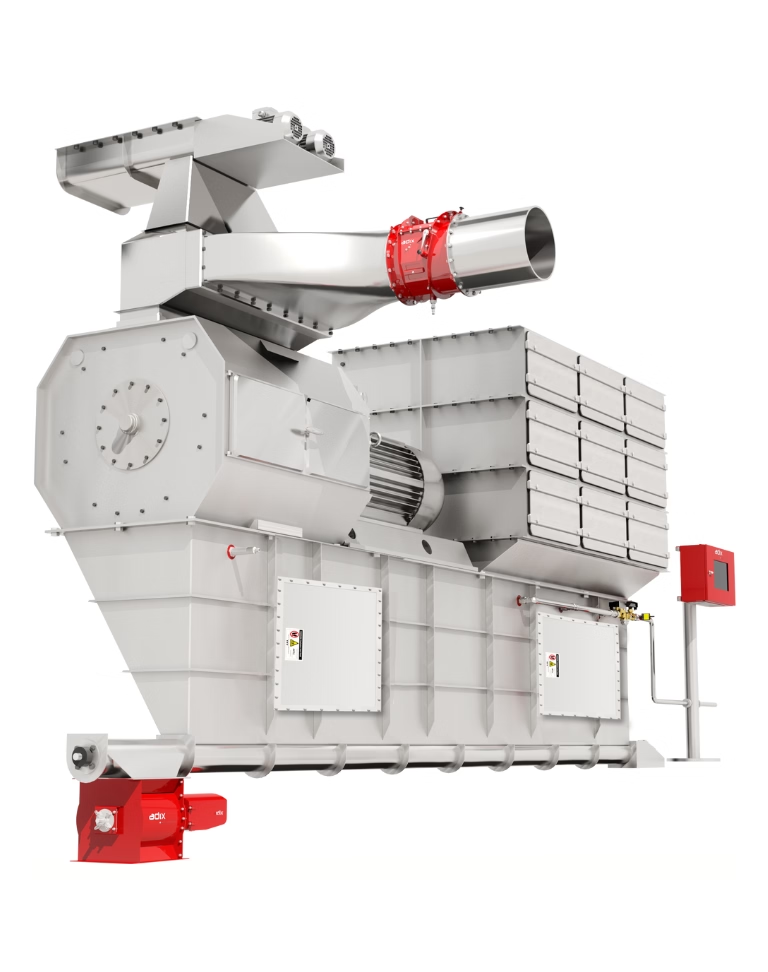
Hammer mills are designed to crush or pulverize solid materials, but they are also one of the main ignition sources in industrial processes. During operation, they generate friction, heat, mechanical impacts and large amounts of fine suspended dust, which makes them a critical point in terms of explosion risk.
At Adix, we protect this equipment with tailored solutions such as temperature and vibration monitoring, explosion venting, active suppression and isolation. These reduce the likelihood of ignition, contain a potential deflagration and prevent it from propagating to connected silos, dust collectors or bucket elevators, keeping facilities and personnel safe.
Why can an explosion occur
in a hammer mill?
During grinding, the hammers spin at high speed and pulverize the product, creating a high concentration of suspended combustible dust. Combined with possible hot spots from friction, mechanical failures or foreign objects entering the mill (such as stones or metal parts), this can create an ignition source.
In addition, mills are usually connected to silos, dust collectors or bucket elevators, which allows an explosion to propagate unless effective isolation measures are in place.
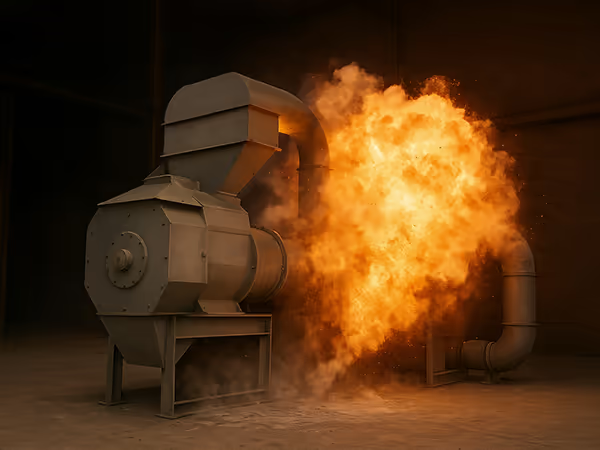
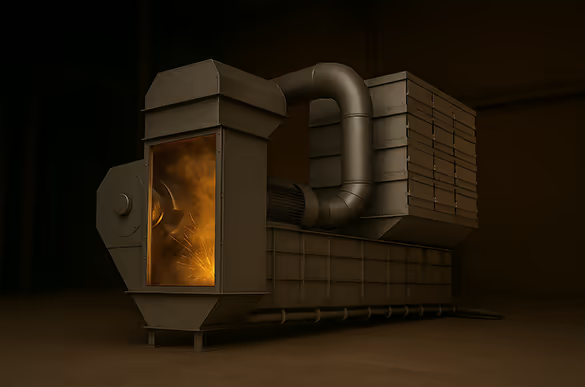
Main hazards
in hammer mills:
ADIX Solutions for Hammer Mills
We apply comprehensive prevention, protection and isolation solutions, tailored to the type of mill, the product processed and the system layout, in compliance with the ATEX Directive (2014/34/EU) and the NFPA 68 and 69 standards.
Preventive monitoring
Temperature sensors, vibration monitoring and foreign object detection.
Explosion venting
Ideal for indoor locations, it prevents flame and material ejection.
Active suppression
Detectors that inject an extinguishing agent within milliseconds to suppress the deflagration at its source.
Explosion isolation
Explosion isolation flap valves or chemical barriers on inlet/outlet ducts to prevent propagation to other equipment.


Not sure how to protect your hammer mill?
We analyze your facility and help you apply the most effective solutions to prevent explosions and protect your hammer mills
