



ATEX Zone Classification: What It Is, How It Is Determined and How It Is Represented

Many industrial facilities handle flammable substances, such as gases, liquids or combustible dusts, that can form explosive atmospheres when mixed with air. These situations pose a significant safety risk to people, equipment and the facilities themselves.
To control this risk, it is essential to identify the areas where these hazardous atmospheres could form. The classification of ATEX zones divides the facility into areas according to the likelihood and duration of an explosive atmosphere, making it easier to adopt specific preventive measures in each case.
This analysis is usually captured in an ATEX zone map, a graphic representation of the plant that clearly shows the areas with explosion risk. This map is a key tool for safety management, as it sets the criteria for selecting suitable equipment, designing installations and implementing safe work procedures.
What is an ATEX zone?
An ATEX zone (hazardous area) is an area in an industrial facility where there is a risk of an explosive atmosphere forming due to the presence of flammable substances. These atmospheres can form mainly from the suspension or accumulation of:
- Flammable gases.
- Flammable liquid vapors.
- Combustible dust.
When these substances mix with the oxygen in air in specific proportions, any ignition source (such as an electrical spark, a hot surface or an open flame) can trigger an explosion.
Regulatory Framework and Classification Standards
Under European Directive 1999/92/EC (on the protection of workers potentially at risk from explosive atmospheres), employers and users are legally required to assess these risks and classify the hazardous areas in their facilities.
To define these areas rigorously, several recognized international standards and industry guides are used:
- International / European standards: * EN / IEC 60079-10-1: for classifying areas with flammable gases and vapors.
- EN / IEC 60079-10-2: for classifying areas with combustible dust.
- US standards: * NFPA 497: Recommended Practice for the Classification of Flammable Liquids, Gases, or Vapors and of Hazardous (Classified) Locations for Electrical Installations in Chemical Process Areas.
- Industry guides and practices: * EI 15 (formerly IP15): Energy Institute code of practice widely used in the oil and gas industry.
- API RP 505: American Petroleum Institute recommended practice for classifying locations at petroleum facilities.
Why Classification Matters
Identifying and defining areas based on the frequency and duration of the explosive atmosphere is a fundamental part of risk analysis in industrial facilities. Done correctly, it allows you to:
- Accurately assess the level of explosion risk in each area.
- Select suitable equipment and protection systems (ATEX certified or with specific marking) to work safely.
- Apply specific administrative and prevention measures (work permits, ventilation, ignition source control).
Why it is key to understand and correctly classify ATEX zones
Correct ATEX zone classification is essential to manage explosion risk effectively in industrial facilities. It makes it possible to pinpoint the areas where hazardous atmospheres can form and act accordingly. In practice, area classification allows you to:
- identify the areas with explosion risk in the facility
- select certified equipment suitable for each type of zone
- design and implement effective safety measures, such as ventilation, ignition source control or safe work procedures
- comply with current industrial safety regulations
This classification is also the foundation of the Explosion Protection Document (EPD). In Europe, the obligation to prepare and keep this document up to date comes from ATEX Directive 1999/92/EC, which Spain transposed through Royal Decree 681/2003 on the protection of the health and safety of workers exposed to risks from explosive atmospheres in the workplace.
What factors determine an ATEX zone
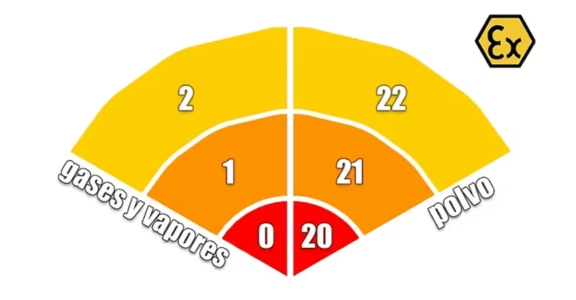
ATEX zone classification is not arbitrary: it is based on a detailed analysis of technical factors specific to each facility. These factors are used to assess the likelihood of an explosive atmosphere forming and, therefore, to define the level of risk in each area.
The most relevant factors include:
Type of flammable substance
The risk behaves differently depending on the substance present:
- flammable gases or vapors
- combustible dust
Each has different characteristics in terms of dispersion, ignition and hazard.
Release frequency
This looks at how often the flammable substance may be released during production, whether continuously, occasionally or accidentally. It is key to determining the type of zone.
Area ventilation
The quality of ventilation directly affects the accumulation of flammable substances. However, its impact varies with the type of substance:
- For flammable gases and liquid vapors: Proper ventilation is essential because it provides dilution, disperses the substances and significantly reduces both the likelihood of explosive atmospheres and the extent of the classified area.
- For combustible dust: Inadequate or poorly designed ventilation can be counterproductive, as air movement can disperse accumulated dust, creating combustible clouds and increasing explosion risk.
Process configuration
The design and operation of the facility are also decisive, including:
- the equipment used
- loading and unloading points
- material storage areas
All these factors are studied together during ATEX zone classification to establish safety measures proportionate to the identified level of risk.
ATEX zone classification: gases and vapors
In facilities with flammable gases or vapors, the ATEX zone classification has three categories based on the likelihood and duration of an explosive atmosphere.
Zone 0
The area where an explosive atmosphere is present continuously or for long periods. This is the highest risk level and requires the strictest safety measures.
Common examples:
- inside tanks
Zone 1
Areas where an explosive atmosphere is likely to occur occasionally in normal operation of the facility. The risk is significant, although not constant.
Common examples:
- areas near valves or connections
- loading or unloading points
Zone 2
Areas where an explosive atmosphere is not likely to occur in normal operation, but could occur occasionally and for short periods. The risk level is lower, but preventive measures are still required.
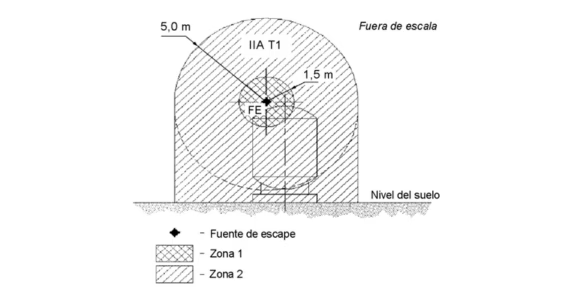
Zone 1 and Zone 2 example:
Vapor from an outdoor breather valve on a process vessel
Location characteristics:
- Location: unobstructed area
- Ambient pressure, Pa: 14.7 psia (101,325 Pa)
- Ambient temperature, T: 68 °F (20 °C / 293 K)
- Ventilation velocity, Uw: 197 ft/min (1.0 m/s)
- Ventilation availability: good (air velocity in calm weather conditions)
Release effects:
- Degree of dilution: medium
- Zone type(s): Zone 1 + Zone 2
- Material group and temperature class: IIA T1
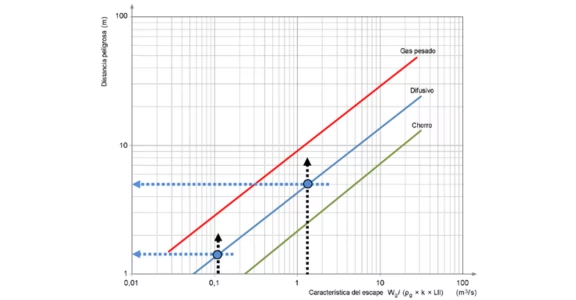
Hazardous area classification:
Based on these parameters, the following hazardous areas apply to the breather valve studied (see Figure 1).
ATEX zone classification for combustible dust
In facilities that handle combustible dusts, ATEX zone classification also has three categories, adapted to the specific behavior of these substances.
Zone 20
The area where a cloud of combustible dust is present continuously or frequently. This is the highest risk level in dust environments.
Common examples:
- inside silos
- inside baghouse dust collectors
Zone 21
Areas where a combustible dust cloud is likely to form in normal operation. The risk is significant, although not permanent, and requires appropriate control measures.
Examples of locations that may result in Zone 21:
- areas next to dust containment and near access doors that are frequently removed or opened for operational reasons when an explosive dust atmosphere is present inside.
- areas outside dust containment near filling and emptying points, conveyor feed points, sampling points, truck unloading stations, conveyor transfer points, etc., when no measures are used to prevent explosive dust atmospheres.
- areas outside dust containment where dust accumulates and where, due to process operations, the dust layer is likely to be dispersed and form explosive dust atmospheres.
Zone 22
Areas where a combustible dust cloud is not likely in normal operation but could occur occasionally and for short periods. Although the risk is lower, preventive measures are still required.
Common mistakes when classifying ATEX zones
ATEX zone classification is a technical process that requires a rigorous analysis of the facility and its real operating conditions. In practice, however, certain mistakes are common and can compromise safety or add unnecessary costs. The most common include:
1. Classifying areas without properly analyzing the process
A generic classification or one based on assumptions, without studying in detail how the facility really works, can lead to unreliable results. To avoid this, the process must be carried out by a multidisciplinary team made up of the user (facility owner) and the classification specialist. At a minimum, the team should include:
- Process engineer: Provides knowledge of operating variables, substances and flows.
- Electrical / maintenance engineer: Defines the characteristics of existing installations and equipment.
- Safety manager: Ensures regulatory compliance and overall risk prevention.
2. Not considering real leaks or releases of material
It is essential to consider possible releases, leaks or emissions during normal operation or abnormal situations, as they are a common source of explosive atmospheres. Note that the standard refers strictly to “foreseeable situations,” not catastrophic events.
3. Underestimating combustible dust accumulation
In dusty environments, it is not only the suspended cloud that matters, but also accumulated deposits that can be dispersed and cause a secondary explosion .
4. Not reviewing the classification after changes to the facility
Changes to equipment, processes or operating conditions can alter the level of risk, so the classification must be updated periodically (usually every 3 to 5 years) or immediately after any substantial modification of the facility. In Europe, the regulations (2009/104/EC / Royal Decree 681/2003 in Spain) legally require employers to carry out these periodic reviews and updates to keep the Explosion Protection Document (EPD) current.
5. Using criteria that are too conservative or too lax
An overly restrictive classification can make the facility unnecessarily expensive, while one that is too permissive increases the risk of an accident. It is therefore essential to follow the current state of the art; in general, the best approach is to apply the current international standards (IEC 60079-10-1 for gases and vapors and IEC 60079-10-2 for combustible dusts) to strike the right balance between safety and cost.
Consequences of incorrect classification.
Incorrect ATEX zone classification can have serious safety, legal and financial consequences. If it does not accurately reflect the real risk of the facility, wrong decisions can be made that compromise safe operation.
Safety risks
An incorrect assessment significantly increases the likelihood of accidents:
- higher likelihood of ignition
- risk of industrial explosions with possible injuries and property damage
Regulatory issues
Failure to meet legal requirements for explosive atmospheres can lead to penalties and liability:
- non-compliance with applicable regulations
- possible legal liability in the event of an incident
Financial impact
Decisions based on poor classification also affect the facility’s profitability:
- use of unsuitable or non-certified equipment
- production stoppages due to incidents or inspections
- corrective modifications, usually more expensive than proper planning
Example of an ATEX zone classification map
An ATEX zone classification map is the graphic representation of the areas with explosion risk in an industrial facility. Its purpose is to show clearly and visually where explosive atmospheres can form and the level of risk in each zone.
These drawings usually include:
- process equipment (tanks, piping, filtration systems, etc.)
- the classified areas around that equipment
- the assigned ATEX zone type (Zone 0, 1, 2 or 20, 21, 22)
With this kind of representation, engineers, maintenance managers and safety staff can quickly identify critical areas and make informed decisions about equipment use, protection measures and work procedures.
ATEX zone maps also make communication easier between the departments involved and serve as a reference during inspections, audits or modifications to the facility.
In studies by specialized companies such as Adix, these maps are an essential part of the technical documentation, as they visually bring together all the information gathered during the risk assessment.
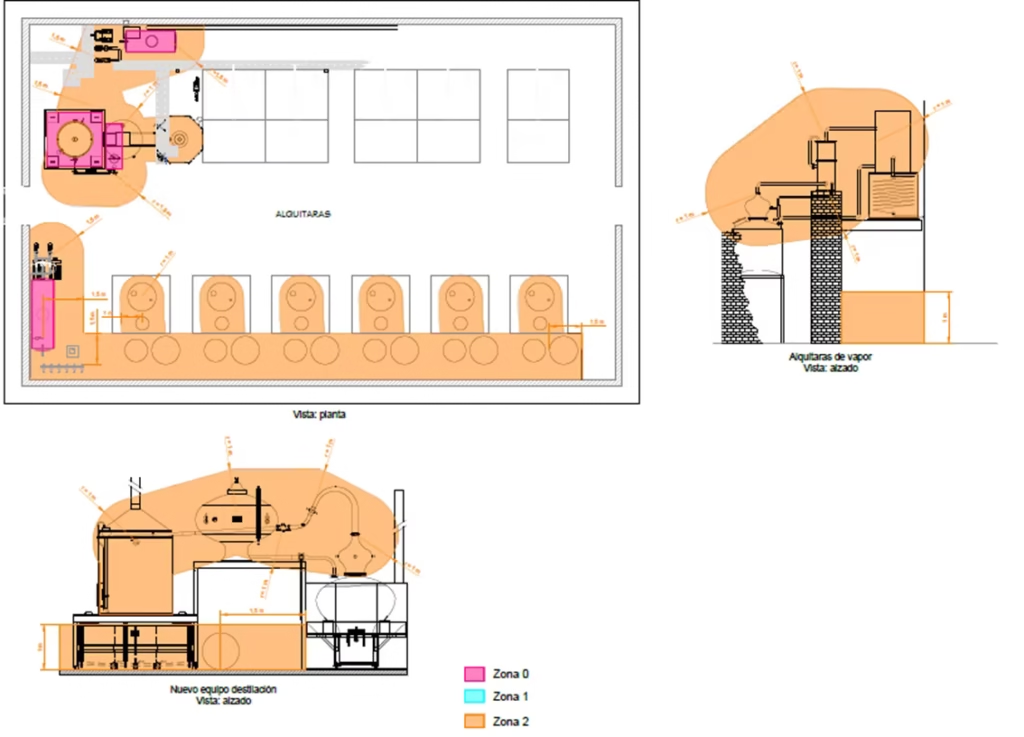
Example prepared by Adix:
Batch distillation is carried out in the building. It has two types of pot stills (steam-heated ones in operation and wood-fired ones out of service), plus a new distillation unit installed next to the wood-fired stills.
Area classification:
- Zone 0: * Inside product tanks (in the vapor space between the liquid and the top of the tank) containing more than 30% v/v ethanol.
- Zone 1: * A sphere with a 4.9 ft (1.5 m) radius around the pot still vent outlet.
- Zone 2: * Inside the pot stills and condensers (associated with startup and shutdown).
- A sphere with a 3.3 ft (1 m) radius around possible vapor leak points on pot stills and condensers.
- The area of a possible pool from leaks at pumps, valves and joints (extending 4.9 ft / 1.5 m horizontally and 3.3 ft / 1 m vertically upward).
Conclusion
Correct ATEX zone classification is essential to managing explosion risk in industrial facilities that handle flammable substances or combustible dusts.
Understanding the factors that cause explosive atmospheres and analyzing them rigorously makes it possible to pinpoint the risk areas in the facility. Classification maps then provide a clear, structured view of those zones.
This approach not only allows the right safety measures to be applied in each area but also supports correct equipment selection, regulatory compliance and accident prevention. Overall, proper ATEX classification is key to protecting people, keeping facilities intact and ensuring continuity of industrial processes.
