



Is Your Plant Safe? Standards and Risk Assessment in the Food Industry

Food and beverage production involves processes that use, handle or producecombustible substances in the form of dust(e.g., flour, sugar, grain) and flammable gases and/or vapors (e.g., ethanol). In addition, the energy needed for these raw material processes may be supplied using other flammable gases and/or vapors (e.g., natural gas, hydrogen).
The explosion risk is therefore always present, and with it the need to prevent an explosion from occurring and/or mitigate its consequences. To achieve this, the main international standards call for an ‘Explosion Risk Assessment’ as one of the main measures. This assessment is carried out through the ‘Explosion Protection Document’ (EPD) under the European ATEX Directives, or through a Dust Hazard Analysis (DHA) under NFPA (National Fire Protection Association) standards.
What do the standards really say about explosions in the food industry?
A proper explosion risk assessment must determine the explosion prevention and/or protection measures needed to minimize the likelihood of an incident and achieve a safe facility. To do so, it should rely on internationally recognized standards:
- European standards (EN), derived from international IEC standards, covering hazardous area classification (EN 60079-10-1 and -2), ignition source assessment (EN 1127-1), explosion venting protection systems (EN 14491) and technical reports (CEN/TR 16829 on explosion prevention and protection in bucket elevators).
- VDI guidelines (German), such as those covering explosion prevention and protection in baghouse dust collectors and bucket elevators (VDI 2263).
- NFPA standards (US), notably the standard on the prevention of fire and dust explosions from the manufacturing, processing and handling of combustible particulate solids (NFPA 654) and the standard for the prevention of fires and dust explosions in agricultural and food processing facilities (NFPA 61).
These standards are neither optional nor generic: they apply directly to processes with combustible dust such as pneumatic conveying, screening, grinding and drying.
Assessing the risk properly is key. Where do I start?
Risk analysis does not start or end with a hazardous area classification drawing. It is a technical process that lets you anticipate incidents and make evidence-based decisions.
According to these standards, thesteps of a complete risk assessmentare as follows:
- Identify the combustible substancesused in the process and obtain their explosibility parameters (minimum ignition energy, minimum ignition temperature, minimum explosible concentration, etc.), for example through direct testing at a certified laboratory or from existing databases (e.g., BIAS GESTIS DUST-EX).
- Determine the frequency and durationof an explosive atmosphere based on process conditions (hazardous area classification), for example by applying EN 60079-10-1 and -2 or VDI guidelines.
- Assess the occurrence and effectiveness of ignition sourcesin the process (hot surfaces, mechanical sparks, electrostatic discharges, electrical sparks, etc.), for example using EN 1127-1.
- Determine the resulting risk levelusing existing methodologies (e.g., RASE2000).
- Define the explosion prevention and/or protection measuresneeded to reduce the risk to a level acceptable to the user, using standards such as CEN/TR 16829 for bucket elevators or NFPA standards.
Recommended prevention and protection measures
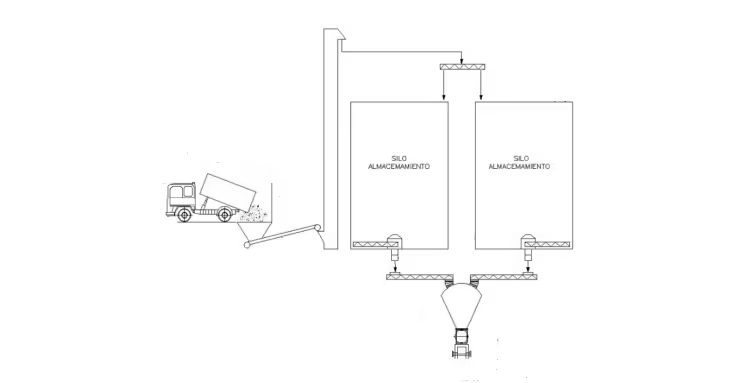
In the food industry,the risk assessment methodology applies to different processes, including:
- Raw material receiving and storage:This can involve granular materials (barley, malt, corn, etc.) or powders such as flour, sugar and spices.
- Cleaning:used for granular materials, with equipment such as cleaners and screens.
- Grinding:usually for granular materials, using mills.
- Powder mixing, using equipment such as weighing scales and mixers.
- Dryingto reduce product moisture: used for granular materials or powders.
